
Microsoft President Brad Smith Wants UK to Lead AI Safety Testing
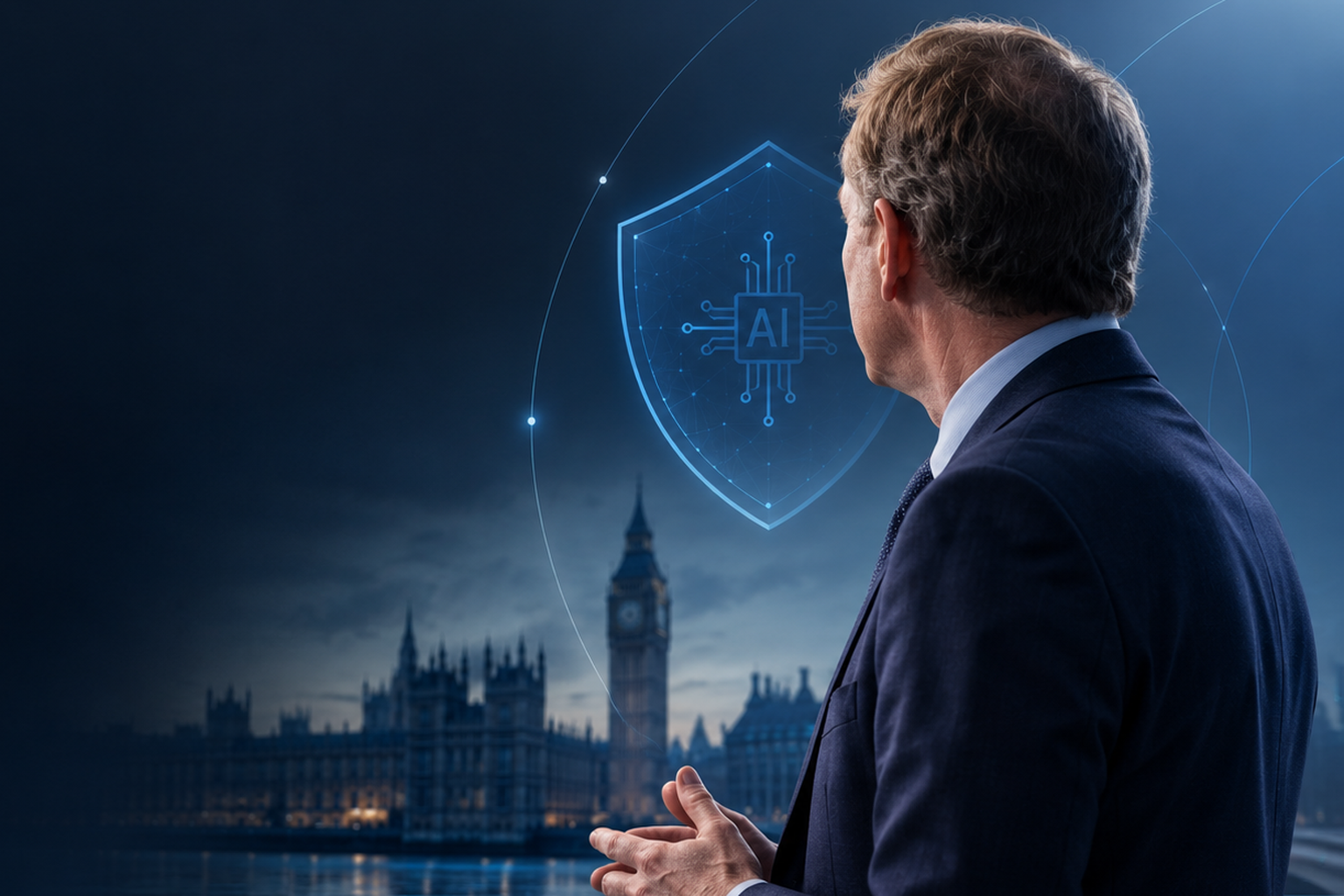
Microsoft President Brad Smith on Tuesday urged governments and industry to "act with urgency" to create "real and effective safety standards" for artificial intelligence, speaking to reporters ahead of an international AI summit in Dublin. He repeated proposals he set out in an interview published on October 11, 2026, for the BBC's Big Boss Interview.
"Right now, your washing machine is subject to more safety rules than AI," Smith told the BBC.
His plan has three parts. The first is an "emergency brake" to halt potentially harmful activity. The second is a legal duty to notify victims when their systems are breached by rogue AI agents. The third would have AI labs getting the approval of outside evaluators before an AI product is released.
That puts Smith at odds with the White House. Microsoft will sign the self-regulation pact President Trump brokered with tech leaders, but Smith argued voluntary commitments only rein in companies that already act responsibly.
"We need real and effective safety standards, and we need the public to have confidence in them," he said in Dublin.
Smith named the UK as the best-placed country to lead, citing its AI Security Institute. He also said officials in Washington view London differently from Brussels, whose approach to AI regulation is based on risk levels under the European Union's AI Act. The UK institute's leverage is limited, though: it operates through voluntary access arrangements with AI companies rather than mandatory powers.
That access was recently interrupted. In September, the Trump administration told Anthropic, Google DeepMind and OpenAI to stop sharing their models with the British agency, and Anthropic then restricted access to its new Claude Mythos 5.1 model. The White House has since restored the institute's early access, following lobbying by Kanishka Narayan, the UK's AI minister, according to The Telegraph. AI Briefing News has not independently confirmed the reversal.
Smith also disputed a claim by Vice President JD Vance that Microsoft had abused the H-1B visa system. He told the BBC that Vance's staff had made a calculation error and that about 80% of Microsoft's 6,000 visa applications were for existing employees. The exchange came days after the government announced on October 9th, 2026, that it was suspending Microsoft from the federal program that allows foreign workers to apply for green cards.
Smith did not say which body would certify models, what capability threshold would trigger pre-release review, or whether Microsoft would accept that review for its own models and those of OpenAI, in which it is an investor. No written version of the proposals had appeared on Microsoft's policy blog as of Tuesday.
The emergency-brake idea is not new for Smith. In 2023 he told a US Senate subcommittee that a "safety brake" is specifically needed for AI systems that manage critical infrastructure like power grids and water systems. His renewed push follows the UK data regulator's enquiries into AI agent testing at OpenAI, Anthropic and Meta, as AI Briefing News reported last week.
Tags
Related Posts
News
SpaceX Agrees to $40 Billion Apollo-Led Lease for Vera Rubin GPUs
2 days ago
News
Anthropic Files for IPO, Posts $16.3 Billion in First-Half Revenue
2 days ago
Policy & Regulation
UK’s £100M AI Biosecurity Lab Gets Up to £200M From OpenAI, Anthropic
4 days ago
Policy & Regulation
US Bans DeepSeek in Federal Civilian Agencies, Even Tools Built on It
8 days ago