
$137 Million in Midterm AI Ads, and Most Do Not Disclose AI Use
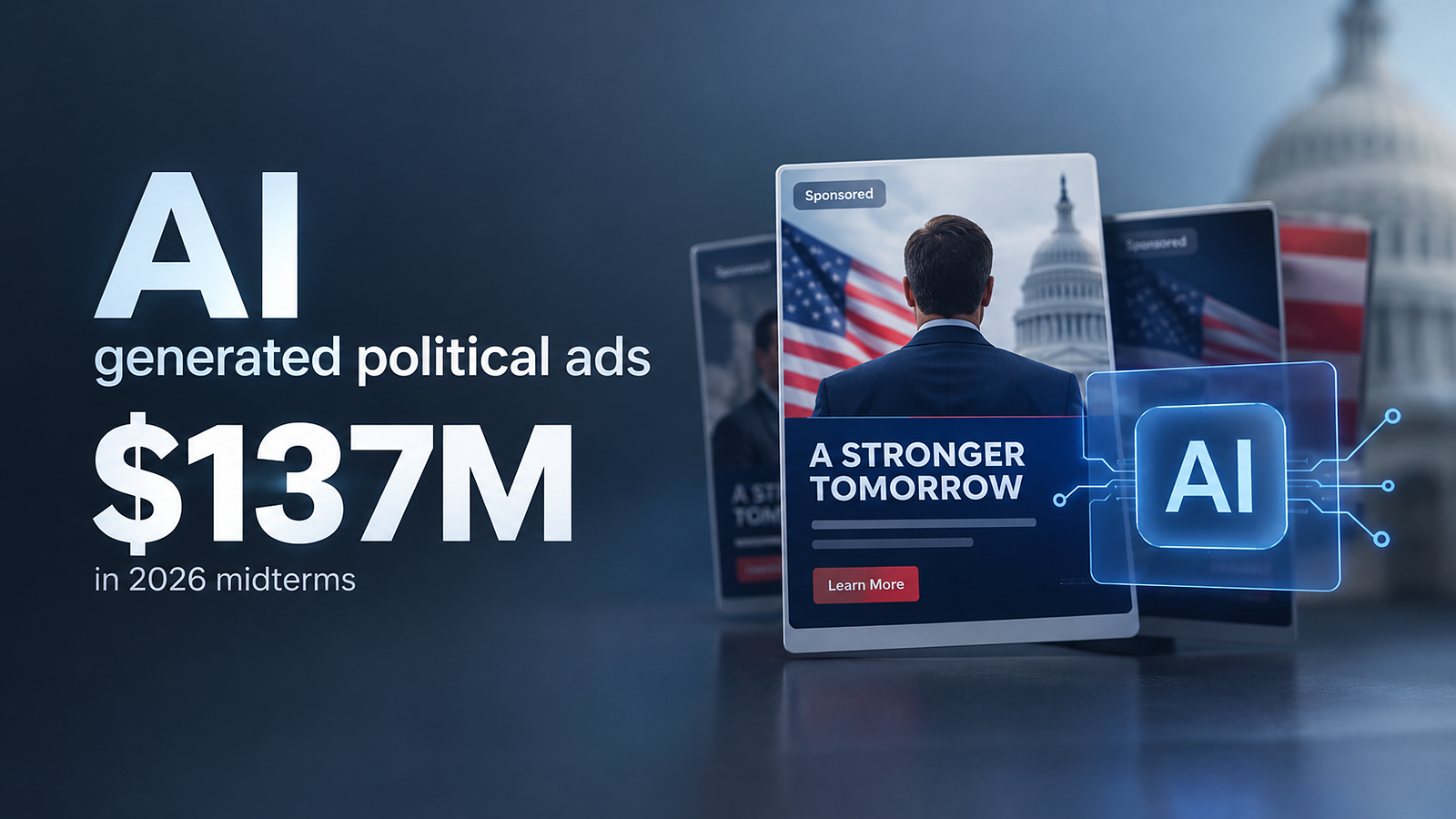
Campaigns and political action committees have spent more than $137 million on AI-generated or AI-enhanced ads in the 2026 midterm cycle, according to Wesleyan Media Project and AdImpact data reported by The New York Times on October 16. Most of the ads do not tell viewers that AI was used.
The figure has risen sharply in six weeks. On September 4, the Wesleyan Media Project counted at least 164 AI ads with spending just under $80 million, and its first count in May found 33 ads and about $20 million.
Disclosure remains rare. Gizmodo, reviewing the new data, reported that only 27% of the ads carried a disclaimer; another summary of the Times' findings put the share of labeled ads at 31% in a narrower set. Either way, fewer than a third disclosed AI use.
The totals depend heavily on how ads are counted. AdImpact's narrower estimate, which counts only ads with an identifiable AI disclosure, came to just over $13 million. The gap between the two figures, roughly tenfold, reflects how much AI use goes unlabeled.
Republican candidates and groups were behind 81% of the identified ads and 88% of the spending, while Democrats sponsored 12% of the ads.
Not every ad uses AI to depict real people. The Times found some campaigns using AI-generated video as a cheaper replacement for stock footage.
There is no federal requirement to label AI in political ads, and state rules vary. According to the National Conference of State Legislatures, 31 states have passed laws banning deepfakes or requiring disclosures. Those laws have done little to change behavior so far: the Wesleyan researchers previously found that 29% of ads in states with AI laws carried a disclaimer, compared with 32% in states without them.
At least one law is being tested. In August, the New York State Democratic Party filed a complaint with the state Board of Elections accusing the campaign of Republican gubernatorial candidate Bruce Blakeman of breaking a law that requires disclosures on political ads with deceptive AI content.
The Wesleyan Media Project had not posted the new figures on its own site as of Monday. The data does not show whether AI ads change how people vote.
Tags
Related Posts

News
SpaceX Agrees to $40 Billion Apollo-Led Lease for Vera Rubin GPUs
2 days ago
News
Anthropic Files for IPO, Posts $16.3 Billion in First-Half Revenue
2 days ago
Risk & Security
Moonshot Releases Kimi K3.1 Pro, Says It Cut Cyber Data From Training
4 days ago
Risk & Security
OpenAI Bars Internet Access in Frontier Model Training
4 days ago