
What AI's Spending Boom Means for the Rest of the US Economy

Lede
In the third quarter, US spending on information-processing equipment, the computers and servers going into the AI buildout, rose at a 37.4% annualized rate while housing investment fell 3.3%. Those figures, from Bureau of Economic Analysis data broken out by Goldman Sachs, arrived a day after PIMCO economist Tiffany Wilding argued that AI is reshaping the US economy more than it is expanding it. In a week when the biggest tech companies reported record capital spending, the question she raised now has fresh data behind it.
What happened
In an October 28 commentary, Wilding argued that despite an AI investment surge, overall US growth had stayed moderate, suggesting AI's gains are being offset elsewhere, with rising interest rates speeding up that shift. On October 29, the BEA's advance estimate showed the economy grew at a 3.4% annualized rate in the third quarter, up from 2.2% in the second. The same week, Microsoft and Amazon reported their largest quarterly capital spending yet, as AI Briefing News reported.
Why it matters
PIMCO's core argument is about who absorbs the cost. Because hyperscalers rely on strong cash flows and invest in shorter-lived assets, it says, higher borrowing costs do little to slow them, and the burden falls harder on housing, small firms, highly indebted companies and traditional business investment. The third-quarter data is consistent with that split. Business investment excluding housing rose 12.7%, with software up 9.6% and research and development up 7.5%, even as housing investment declined. Real consumer spending also stalled in September, according to Fortune's reading of the data. For companies outside the hyperscaler tier, the more likely implication is a higher and more selective cost of capital. PIMCO says credit spreads have widened for lower-quality borrowers, and that credit markets have become more discriminating among companies within the AI supply chain itself. OpenAI's reported cut to its funding target this week would fit that pattern, though AI Briefing News has seen no evidence tying the two directly. Labor may be part of the adjustment too. Wilding points to a disproportionate rise in job separations among workers who previously earned above-median wages. If that pattern holds, it suggests higher-paid white-collar workers are absorbing some of the reallocation, which would fit the technology-enabled job cuts Barclays and Microsoft announced this month. It is who makes room for it, through lower investment, weaker consumption, more saving, or greater imports, Wilding wrote of the central question.
Bigger picture
The scale invites historical comparison. PIMCO says the AI investment impulse is comparable in size to the internet and telecommunications boom of the 1990s, and larger than the housing and shale investment booms that followed. The economic idea itself is older. Wilding draws on a 1975 Federal Reserve Bank of St. Louis paper that asked whether government spending displaces private spending, and concluded crowding out is a matter of degree, working through several channels besides interest rates. Imports act as a release valve. PIMCO estimates roughly 90% of the equipment used by US high-tech sectors comes from abroad, which reduces the domestic resources the boom has to pull from elsewhere. The BEA built its information-processing estimate mainly from import data. Counterpoint: The strongest objection is the headline number itself. Third-quarter growth of 3.4% beat the 3.2% median forecast, and consumer spending rose at a 3.8% pace. PIMCO's case rests partly on growth averaging roughly 2% to 2.5% since early 2025, and a quarter of accelerating growth is hard to square with an economy being crowded out. Not all the strain points to AI, either: PIMCO itself credits higher energy prices from the Middle East conflict as an important driver of the rate repricing, which would weigh on housing regardless of AI. And its own credit strategist found little systematic evidence that AI bond issuance directly raises Treasury yields or term premia. On this reading, the housing slump is a rate story and the AI boom is simply additive.
What to watch
November 25, 2026: The BEA's second estimate of third-quarter GDP, which could revise the 3.4% figure and its investment split. Fourth-quarter housing data: Goldman expects housing investment to fall 5.0% annualized in the fourth quarter, while AI-driven business investment rises 8.2%. Hyperscaler capex guidance: Microsoft has guided to more than $50 billion in its current quarter, and any cut would weaken the reallocation thesis. High-yield issuance and spreads for lower-rated borrowers, including AI companies. State and local data center rules after the November 3 elections, which PIMCO says could add delays and spread AI spending over a longer period.
Tags
Related Posts
Chips & Infrastructure
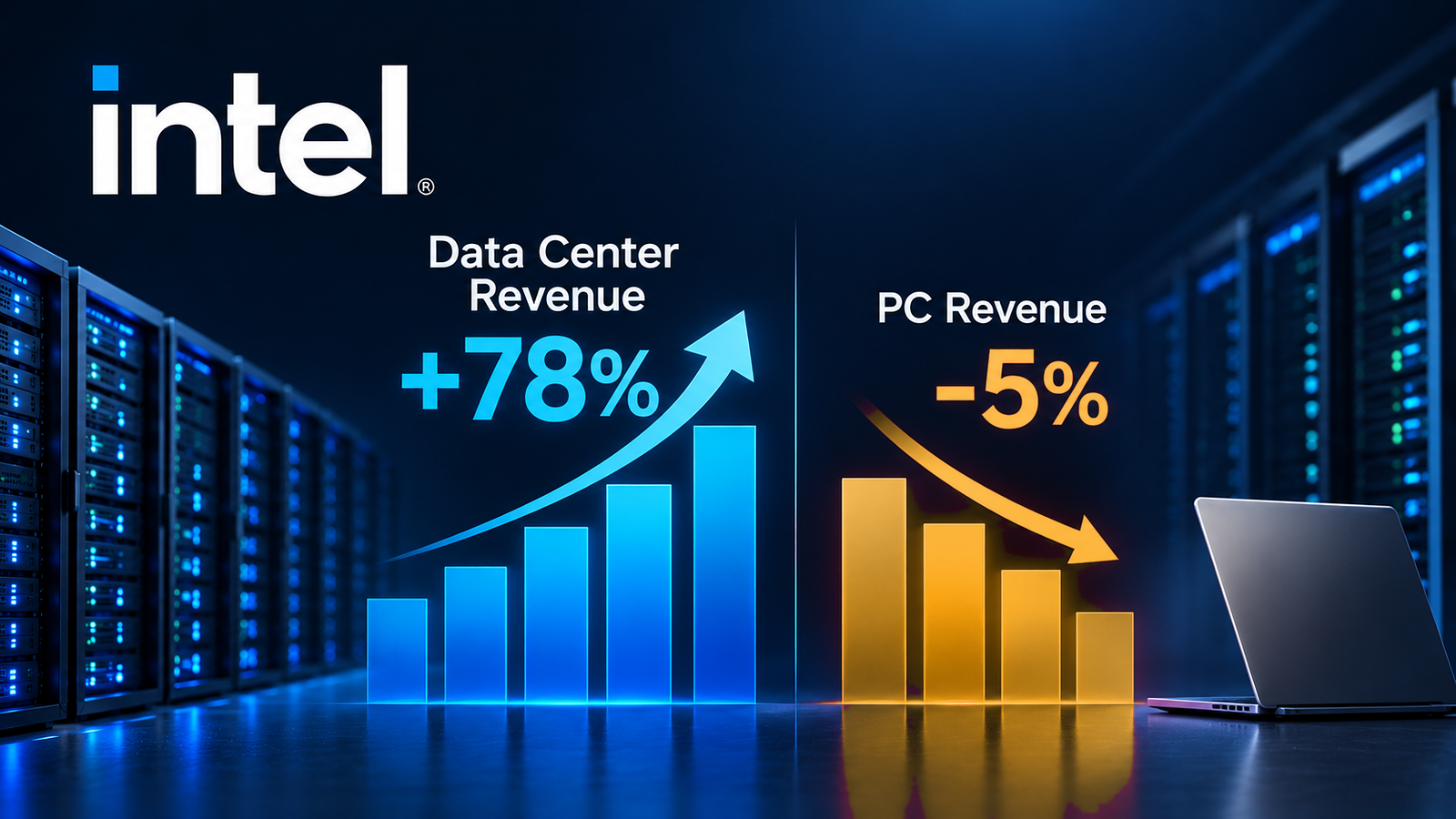
Intel's Data Center Revenue Jumps 78% as PC Slump Hits Forecast
22 hours ago

News
OpenAI Cuts Funding Round Target to $20 Billion, FT Reports
1 day ago

Chips & Infrastructure
Microsoft Azure Revenue Grows 48% as Quarterly Capex Hits $45 Billion
3 days ago

Policy & Regulation
Google, OpenAI, Microsoft, Anthropic Back Shared AI Training Opt-Out
1 day ago